First Aid Kit Guide: What Your Family Actually Needs
The exact contents of a complete family first aid kit for handling common emergencies — wounds, burns, sprains, allergic reactions — while waiting for help.
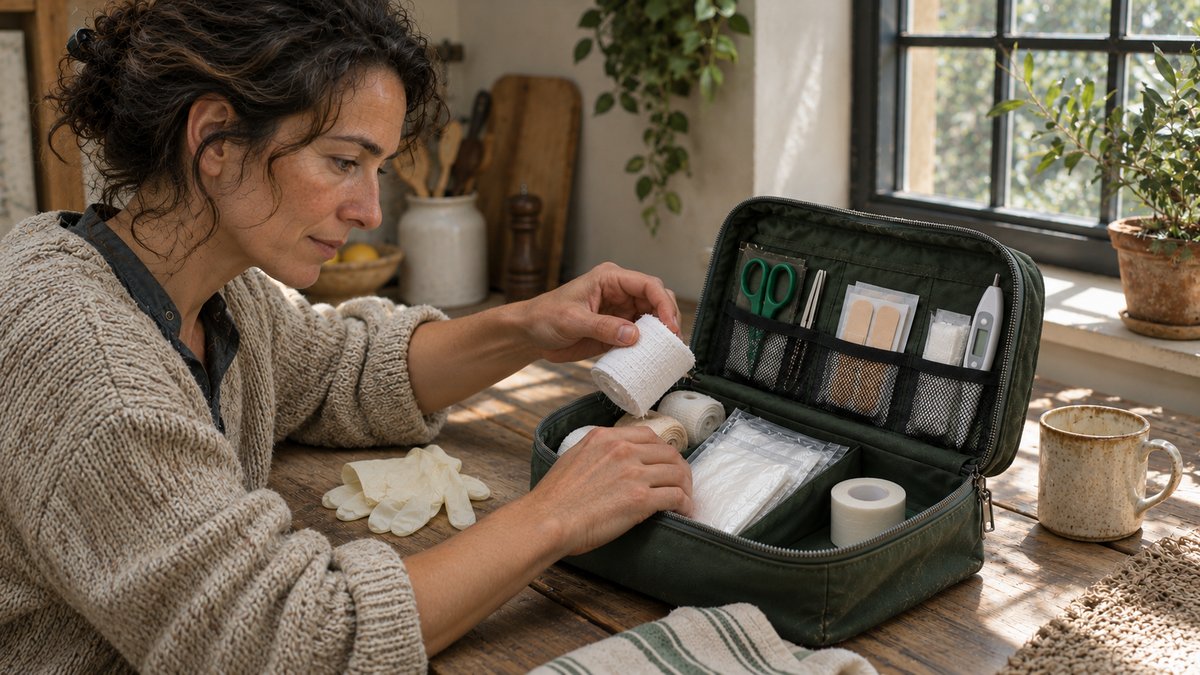
A first aid kit you bought at the airport and never opened is not a first aid kit — it’s theater. This guide tells you exactly what to put in a kit that will actually function in the situations your family is likely to encounter.
What a Home First Aid Kit Is (and Isn’t)
A home first aid kit bridges the gap between an injury occurring and professional medical care arriving or becoming accessible. It handles:
- Minor wounds (cuts, scrapes, punctures)
- Burns (minor to moderate)
- Sprains and strains
- Allergic reactions (mild to moderate, plus anaphylaxis bridge to EMS)
- Nosebleeds
- Eye injuries
- Fractures and dislocations (immobilization pending professional care)
It is not a substitute for professional emergency care. When in doubt, call 911.
The Complete Family First Aid Kit
Build this kit in a waterproof bag or hard-sided case. Everything visible and accessible — not crammed into a bag where you have to unpack it to find anything.
Wound Care
Sterile gauze pads: Multiple sizes — 2×2, 3×3, and 4×4 inches. Used for wound packing, covering, and absorbing. This is the most-used item in a serious kit. Keep 10–20 of each size.
Rolled gauze (Kerlix or similar): For securing dressings, wrapping sprains, and wound packing. Keep 4–6 rolls.
Wound closure strips (Steri-Strips or similar): For lacerations that need closing but aren’t severe enough for stitches, or as a bridge until stitches can be placed. Much easier to use than sutures for untrained responders.
Butterfly closures: Narrower than Steri-Strips, used for irregular wounds.
Adhesive bandages (Band-Aids): Assorted sizes including knuckle, fingertip, and large patches. The standard commercial kits usually have too many small ones and too few large patches — balance your stock.
Hemostatic gauze (QuikClot or Combat Gauze): Gauze impregnated with hemostatic agent (kaolin) that accelerates clotting. Dramatically reduces bleeding time for severe wounds. Squeeze into the wound, apply direct pressure for 3 minutes. Keep 1–2 packages. This is a significant upgrade from plain gauze for serious wounds.
Non-stick dressings (Telfa): For burns and abrasions — gauze sticks painfully to these wounds. Non-stick dressings change without reopening the wound.
Wound wash/saline solution: For cleaning wounds. Sterile saline is better than tap water and far better than hydrogen peroxide (which damages tissue). Wound wash cans are available at drugstores for $5–8.
Medical adhesive tape: Paper tape (less skin irritation), cloth tape (more secure). Both are useful.
Bleeding Control
Tourniquet (CAT or SOFTT-W): A proper tourniquet, applied correctly and tightened appropriately, controls life-threatening limb bleeding that nothing else can. This is not the rubber strip from a cheap kit — it’s a purpose-designed strap with a windlass that generates consistent pressure. The Combat Application Tourniquet (CAT) is used by the US military and EMS and costs ~$30. Keep one in your kit and know how to use it.
Chest seals (HyFin or similar): For penetrating chest wounds — prevents a pneumothorax (collapsed lung) from worsening. Vented versions are preferred. For families with hunters, rural outdoor activities, or any situation where penetrating trauma is possible.
Pressure dressings (Israeli Bandage): Combined dressing, bandage, and pressure mechanism in one unit. Excellent for head wounds, large area wounds.
PPE
Nitrile gloves: Multiple sizes. Buy quality gloves that won’t tear when you’re trying to work quickly. Keep 4–6 pairs. Latex-free — latex allergies are common and unpredictable.
CPR mask (pocket resuscitation mask): Allows rescue breathing without direct mouth-to-mouth contact. Any trained rescuer should use one. Keep 2.
Safety glasses or goggles: Splash protection when dealing with significant bleeding or eye irrigation.
Immobilization
SAM Splint: Flexible aluminum/foam splint that can be bent to any shape. Immobilizes wrists, ankles, fingers, forearms. One per kit; it handles multiple body parts.
Elastic bandages (ACE bandage, 3” and 4”): For compression wrapping of sprains, securing splints. Keep 2–4.
Triangular bandage with safety pins: Sling for arm injuries, general bandaging.
Finger splints: Small aluminum/foam splints for finger injuries. Keep 4–6 various sizes.
Burn Treatment
Burn gel (Water-Jel or similar): Provides immediate cooling and pain relief. Far better than improvised home remedies (butter, toothpaste, ice). Apply after cool running water has lowered skin temperature.
Non-adherent dressings: Burns must not be covered with gauze that will stick. Non-stick (Telfa) or silicone-coated dressings.
Plastic wrap (Saran Wrap): An excellent temporary burn dressing — doesn’t stick, maintains moisture, allows viewing of the wound. The American Burn Association recommends it as a temporary cover for transport to care.
Medications
Ibuprofen and acetaminophen (adult and children’s): For pain and fever. Both — they work through different mechanisms and can be alternated.
Diphenhydramine (Benadryl): Antihistamine for allergic reactions, hives, itching. Fast-acting.
Aspirin (325mg tablets): For suspected cardiac events in adults (not children). Chewing a standard aspirin while waiting for EMS can reduce heart attack damage.
Antacid tablets: For digestive discomfort, which can accompany stress responses.
Electrolyte packets: For dehydration from illness, heat, or exertion.
EpiPen or Auvi-Q: If anyone in your household has known severe allergies (nuts, bee stings, shellfish), an epinephrine auto-injector is non-negotiable. Keep two — one use each, and allergic reactions sometimes require a second dose before EMS arrives. These require a prescription. Keep them current — epinephrine degrades quickly after expiration.
Assessment Tools
Digital thermometer: For fever monitoring.
Blood pressure cuff (sphygmomanometer): Useful but optional for most households. Essential if anyone in the home has a cardiac history or hypertension.
Pulse oximeter: Clips on a finger, measures blood oxygen saturation. Valuable for detecting respiratory illness severity (dangerous if O2 drops below 94%), COVID-19 monitoring, and altitude sickness assessment. ~$20–40.
Penlight: For pupil response assessment (especially after head injuries).
Scissors (medical/trauma shears): Cuts clothing to access wounds without moving the patient. Quality trauma shears ($10–20) cut through denim and seatbelts.
Tweezers: For splinter removal.
Safety pins (assorted): Closing slings, securing bandages.
Documentation
Printed emergency reference: A laminated first aid reference card (American Red Cross publishes one). Instructions for CPR, choking, serious bleeding, burns.
Local emergency numbers: Poison Control: 1-800-222-1222 (US, 24/7). Your regional poison center. Local hospital address and phone.
Medication allergy information: Index card with every family member’s name, allergies, blood type, and current medications. Update when anything changes.
Kit Organization and Maintenance
Container: A waterproof bag or hard-sided container clearly labeled “FIRST AID.” Everyone in the household should know where it is.
Organization: Zone by use — bleeding control in one pouch, medications in another, wound care in another. Clear labeling on each section.
Maintenance schedule (every 6 months):
- Replace expired medications
- Replace any opened sterile items (opened gauze loses sterility)
- Restock anything used
- Check tourniquet function
- Replace expired EpiPens
Keep the kit with the kit: Don’t use the kit items for non-emergency purposes. Grabbing a bandage from the kit for a minor cut and not replacing it is how kits degrade.
Skills Worth Having
Having the kit matters less than knowing how to use it. The Red Cross offers affordable, widely available classes:
- First Aid/CPR/AED: $20–80, 4–6 hours. Covers CPR, choking, bleeding, and basic first aid.
- Stop the Bleed: Free, 2 hours. Specifically covers severe bleeding control — tourniquet use, wound packing, pressure dressings. Find a class at bleedingcontrol.org.
- Wilderness First Aid: More comprehensive, designed for situations where EMS is delayed.
Related guides:
More in this category
Rejoindre la communauté
Recevoir nos guides chaque semaine
Des conseils pratiques, des retours terrain, les meilleures ressources — directement dans votre boîte mail.
Rejoindre le Refuge →