Preparedness Psychology: Managing Stress and Staying Clear-Headed in a Crisis
How to manage stress, maintain family cohesion, and make good decisions in an emergency — the psychological dimension of preparedness that most guides skip.

Most preparedness content focuses on hardware: what to stock, what to buy, how to store it. But in an actual emergency, the limiting factor is almost never equipment. It’s decision-making quality, communication, and psychological resilience under stress.
This guide covers the human side of preparedness — the part that makes everything else work.
Why Humans Make Bad Decisions in Emergencies
Understanding the psychological dynamics helps you anticipate them:
Normalcy Bias
Normalcy bias is the tendency to underestimate both the likelihood and severity of an event because it falls outside your previous experience. It’s the reason people stay in hurricane zones after evacuation orders, fail to evacuate during the early phases of a wildfire, and dismiss the significance of warning signs.
The logic is comfortable: Things like that don’t really happen here. It won’t be as bad as they’re saying. If it were that serious, surely someone would be more urgent about it.
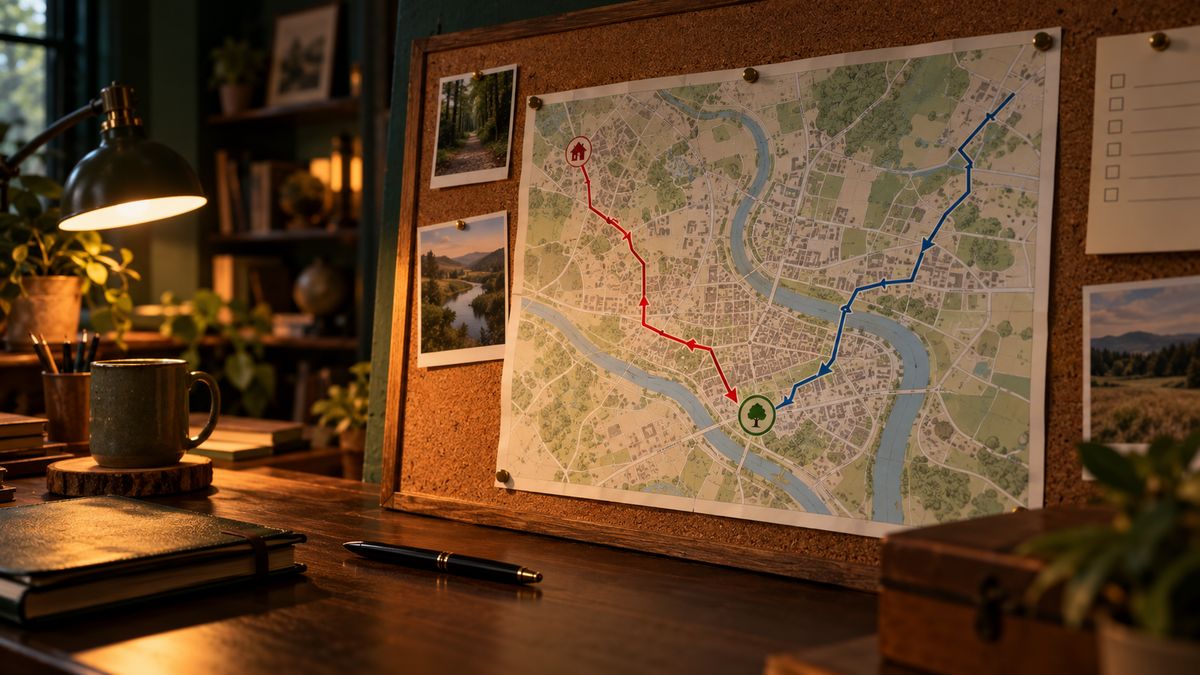
The antidote isn’t anxiety — it’s predetermined decision rules made before you’re under stress. Write them down: “If a mandatory evacuation order is issued for our zone, we leave within one hour, no negotiation.” “If we lose power for more than 24 hours in winter, we go to [person’s] house.”
Panic and Its Effects on Decision-Making
Panic is a physiological state: elevated heart rate, narrowed attention, reduced access to complex reasoning. Under acute panic, most people default to:
- Freezing (paralysis)
- Fleeing (sometimes useful, sometimes dangerous)
- Reverting to the most familiar behavior (not necessarily the best one)
The implication: skills practiced under low stress become available under high stress. Skills never practiced under low stress are essentially unavailable in a crisis. This is why fire departments and military units do repetitive drills — not to teach the information, but to make the response automatic.
For your family: Walk through your evacuation plan regularly. The goal isn’t that everyone remembers it — it’s that the first action under stress is automatic.
Cognitive Overload
Under stress, working memory degrades. Complex multi-step decision-making becomes difficult. This is why checklists exist — they externalize the cognitive load that stress is making harder to carry.
Your emergency plan is a checklist. Laminate it. Keep it in a known place. Under stress, you won’t remember everything — but you can follow a document.
The Stress Response: What’s Actually Happening
When you perceive a serious threat, your body initiates the stress response within seconds:
- Adrenaline and cortisol flood your system
- Heart rate and blood pressure rise
- Blood flow redirects to large muscles
- Digestion slows
- Sensory processing sharpens on the perceived threat
- Prefrontal cortex (rational decision-making) activity reduces
This is useful for running from a predator. It’s less useful for navigating a highway in a mass evacuation while managing a 7-year-old’s fear and trying to remember where the go-bags are.
Practical approaches:
Box breathing: 4 counts inhale — 4 counts hold — 4 counts exhale — 4 counts hold. Repeat 4 cycles. This activates the parasympathetic nervous system and partially counteracts the stress response. It takes 90 seconds and genuinely helps. Teach it to your family before you need it.
Name it: The act of labeling an emotion (“I’m scared, that’s normal”) activates the prefrontal cortex and reduces the intensity of the emotion. This is called affect labeling and has solid research backing.
Focus on the next one thing: Don’t try to solve the whole emergency at once. What is the one next action? Do that, then assess again.
Family Communication During Crises
Stress degrades interpersonal communication at exactly the moment it matters most. Some specific patterns to understand:
Children regress. A 10-year-old who is usually reliable may behave like a 5-year-old under serious stress. This is normal and not a failure — the brain prioritizes survival over developmental progress. Respond to the emotional age they’re expressing, not the chronological one. Physical comfort (a hand to hold, being carried for a child who is usually independent) matters more than information during the peak stress period.
Different people process differently. Some family members need to talk and externalize; others go quiet and internalize. During an emergency, honor both patterns while keeping communication channels open. The quiet person who seems calm may be overwhelmed — check in.
Decision authority: Under stress, unclear decision authority leads to paralysis or conflict. Agree in advance who makes which decisions during an emergency. This doesn’t mean one person dictates — it means you’ve pre-agreed on a process so you’re not arguing about process while the situation develops.
Short, clear communication: Under stress, people process short, concrete sentences better than complex explanations. “Put your shoes on, grab your bag, we’re going to [meeting point]” works better than a nuanced explanation of the situation.
Children and Emergencies
Children’s response to emergencies is shaped more by their parents’ response than by the event itself. Studies consistently show that children whose parents remained calm and task-focused during emergencies experienced less lasting trauma than children whose parents were visibly overwhelmed.
What helps children:
- Clear, age-appropriate explanation: “There’s a storm coming. We’re going to [safe place]. We have a plan.”
- Specific roles: “Your job is to carry your backpack and stay close to me.” A role reduces helplessness.
- Maintained routines where possible: familiar foods, bedtime routines, familiar objects
- Honest but contained information: don’t lie about what’s happening, but don’t expose them to adult-level uncertainty and fear
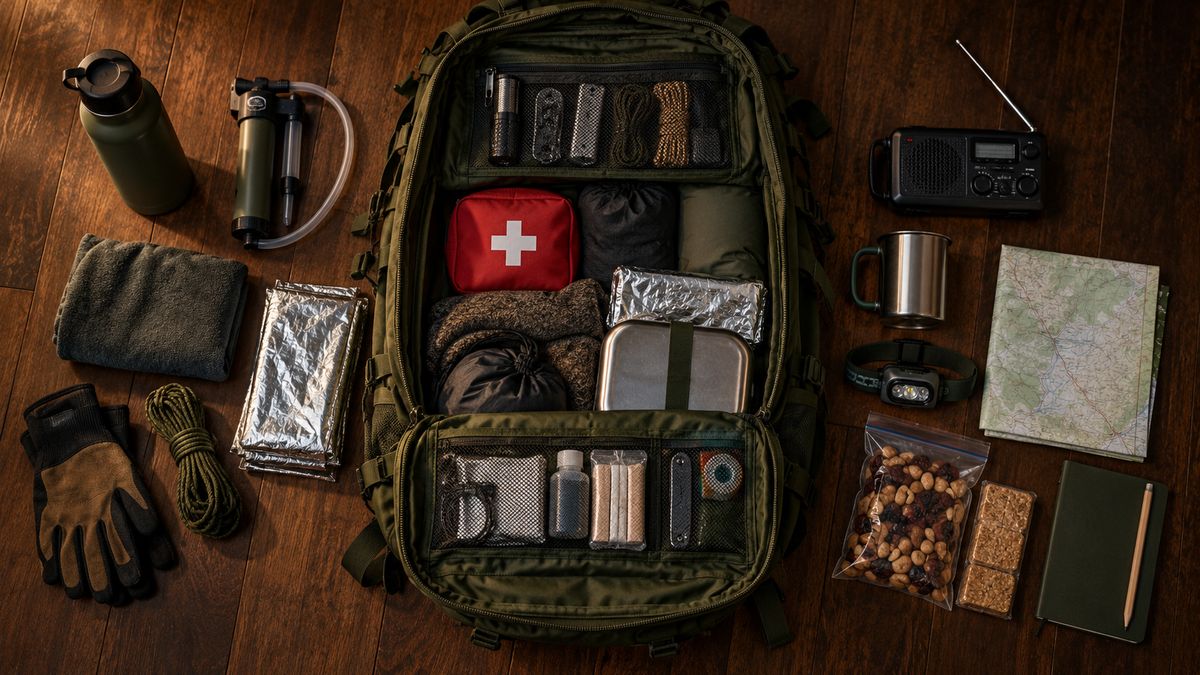
Involve them in preparedness: Children who participate in building the family emergency kit and practicing the plan have significantly lower anxiety about emergencies than those who are simply told what will happen. The sense of capability and agency is psychologically protective.
After an emergency: Children may need more time to process than adults expect. Dreams, clinginess, regression, repeated play-acting of the event are all normal. These generally resolve with time and parental attunement. If they persist beyond 3–4 weeks or significantly impair daily functioning, consider talking to a pediatric mental health professional.
The Preparedness Community: Motivation and Pitfalls
Emergency preparedness exists on a spectrum. At one end: basic pragmatic preparation (extra food, emergency kit, evacuation plan). At the other: intense focus on civilizational collapse scenarios that generates significant anxiety while doing relatively little practical good.
The healthy version feels like insurance — you’re not hoping to use it, you’re glad it’s there, and it doesn’t dominate your mental life. Research shows this form of preparedness is associated with:
- Lower anxiety about the future
- Higher sense of personal efficacy
- Better social cohesion (people who prepare tend to also coordinate with neighbors)
- Faster recovery from actual emergencies
Warning signs of unhealthy preparedness:
- It generates more anxiety than it relieves
- It consumes significant time, money, or mental energy beyond what your actual risk level warrants
- It’s driven primarily by catastrophic worst-case scenarios rather than realistic ones
- It creates distance from family or community rather than building resilience together
If preparedness feels like a source of dread rather than a practical project you work on occasionally, that’s worth examining.
Practical Resilience Building
Psychological resilience isn’t just about attitude — it’s also built through concrete capability:
Skills reduce anxiety. People who know first aid are less afraid of medical emergencies. People who know how to purify water are less afraid of water disruptions. Building actual skills — not just buying equipment — is one of the most psychologically effective forms of preparedness.
Community reduces risk. The most resilient communities in disasters are those with strong social networks. After Hurricane Katrina, mortality was dramatically lower in neighborhoods where people knew their neighbors. After the 1994 Northridge earthquake, communities with existing neighborhood organization recovered faster and with less individual trauma.
Building a relationship with your neighbors before you need them isn’t just practically useful — it’s psychologically protective.
Post-emergency recovery: Even well-prepared families who navigate an emergency successfully often experience a delayed stress response once the immediate danger is past. This is normal. When the stress response finally releases, emotions that were suppressed during the crisis may surface. Give yourself and your family permission to process without having to be immediately “fine.”
Related guides:
More in this category

Rejoindre la communauté
Recevoir nos guides chaque semaine
Des conseils pratiques, des retours terrain, les meilleures ressources — directement dans votre boîte mail.
Rejoindre le Refuge →