Bug-Out Bag: What to Pack and How to Build Your Evacuation Kit
Your bug-out bag is your portable survival kit for emergency evacuation. Here's how to pack it to sustain yourself for 72 hours anywhere.
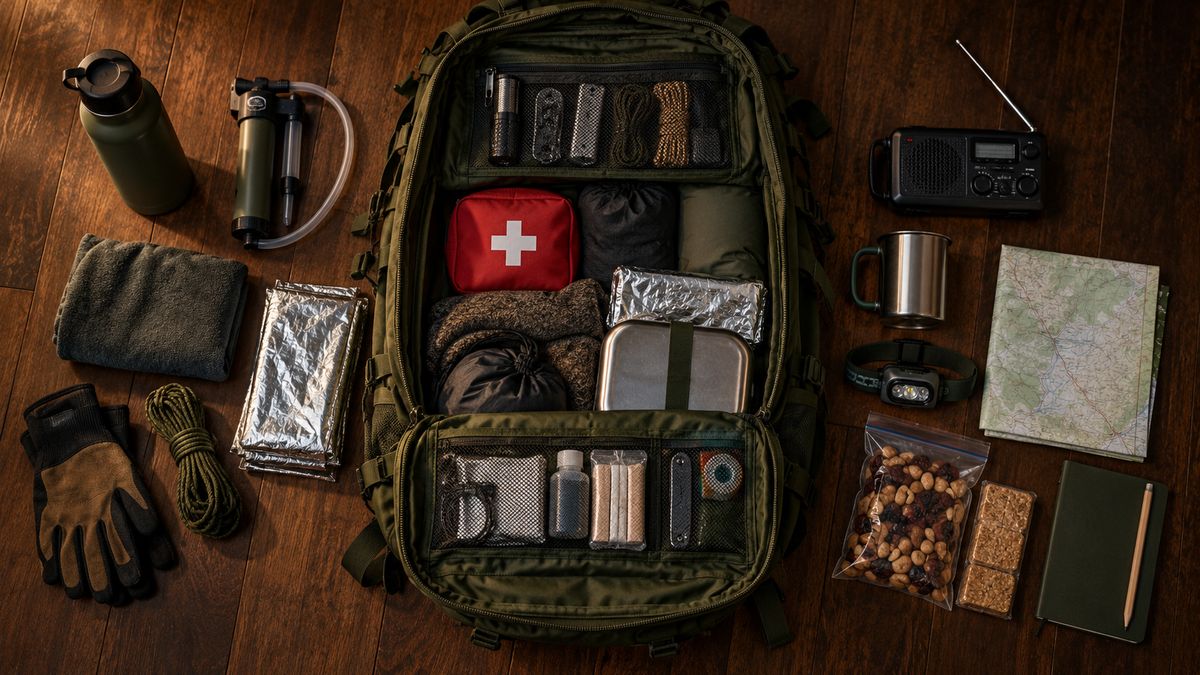
A bug-out bag isn’t a doomsday prop. It’s a practical tool for the most common evacuation scenarios: a wildfire bearing down on your neighborhood, a chemical spill nearby, a hurricane forcing you to leave with an hour’s notice. The goal isn’t to survive in the wilderness indefinitely — it’s to sustain yourself and your family for 72 hours while you get to safety.
Here’s how to build one that actually works.
The Core Principle: Mobility Over Comfort
A bug-out bag is not your home 72-hour kit with a shoulder strap. Everything in it is chosen for weight, compactness, and reliability. If you can’t carry it for 10 miles, it doesn’t belong in the bag.
This distinction matters: your home kit can hold heavy canned goods, a full-size first aid kit, and bulky gear. Your bug-out bag holds lightweight, compact versions of the same categories — plus the assumption that you’re moving.
The Bag Itself
Capacity: 40–60 liters for adults. Big enough for 72 hours of supplies; small enough to move quickly.
Features to look for:
- Internal frame or padded back panel — weight distribution matters for distance
- Hip belt — transfers weight to your hips, spares your shoulders
- Multiple external pockets for quick-access items
- MOLLE webbing for attaching extra pouches if needed
- Subdued colors (gray, olive, navy) — no need to advertise
Reliable options: Osprey Atmos 50, 5.11 Tactical Rush 72, 3V Gear Outlaw, Kelty Redwing. For budget: Decathlon Quechua MH100 at $60–80 works well.
Water (3 Liters Minimum)
Carry:
- 2–3 liters in bottles or a hydration bladder (Platypus, Nalgene, CamelBak)
Purification (critical — this extends your range indefinitely):
- Sawyer Squeeze filter or LifeStraw: filters up to 100,000 gallons, weighs 3 oz
- Water purification tablets (Aquatabs): backup, 50 tabs = 50 liters treated
- Stainless steel 32oz bottle: can boil water over fire as last resort
The filter makes you independent of your stored water. You can refill from streams, ponds, or any available source.
Food (72 Hours, Lightweight)
Target 2,000 calories per day per adult in a compact, lightweight form:
Best options by weight/calorie ratio:
- Freeze-dried meals (Mountain House, Good To-Go): 500–700 calories, 4–6 oz each
- Energy bars (Clif, Kind, ProBar): 200–400 calories, 2–3 oz each
- Nuts and dried fruit: 150–200 calories per oz — the best caloric density available
- Peanut butter single-serve packets: 190 calories, 1.1 oz
- Instant oatmeal packets: 150 calories, 1.5 oz
- Instant coffee or electrolyte powder: minimal weight, significant morale
Avoid: canned food (heavy), anything requiring refrigeration, bulky packaging. Every oz counts.
Total food weight target: 3–5 lbs for 72 hours.
Shelter and Warmth
You may not reach a shelter. Plan to sleep outside.
Minimum kit:
- Emergency bivy bag (SOL Escape Bivvy or similar): 8–12 oz, keeps you warm to 20°F — far better than a standard mylar blanket
- 550 paracord, 50 feet: shelter construction, clothesline, general utility
- Tarp (8×10 ft, silnylon): 12–16 oz, creates weather protection with the paracord
If weight allows:
- Lightweight sleeping bag (rated to expected lows in your area)
- Pack liner or dry bags: keeps gear dry in rain
Clothing in the bag:
- Wool or synthetic base layer (not cotton — kills when wet)
- Waterproof rain jacket
- Extra socks (2 pairs wool) and underwear
- Lightweight gloves
- Buff or neck gaiter
Fire and Light
Fire:
- Bic lighter (2–3)
- Waterproof matches in a sealed container
- Ferrocerium firestarter (works wet)
- Tinder (fatwood sticks, Wetfire cubes)
Light:
- Headlamp with extra batteries (Petzl Tikka, Black Diamond Spot)
- Small backup flashlight
- Chemical lightsticks: 12-hour duration, no batteries, unbreakable
Navigation and Communication
Navigation:
- Quality baseplate compass (Suunto, Silva)
- Printed paper map of your region and state
- Paper copies of your pre-planned evacuation routes
Communication:
- Battery + hand-crank weather radio (Midland ER310): NOAA alerts, local emergency broadcasts
- Fully charged power bank (20,000mAh): 5–6 phone charges
- Written list of important contacts (never rely on a dead phone)
Optional but valuable:
- FRS/GMRS walkie-talkie (Motorola T800): communicate with family without cell network
- Portable solar panel (20W Anker): recharge devices during daytime travel
First Aid (Lightweight Version)
This is not your full home first aid kit. It’s the essentials for field use:
- Israeli pressure bandage (severe bleeding control)
- CAT tourniquet (if trained)
- Hemostatic gauze (QuikClot)
- 10 sterile gauze pads 4×4”
- 2” and 4” elastic bandages
- Adhesive bandages in assorted sizes
- Medical tape
- Nitrile gloves (3 pairs)
- Alcohol wipes
- Betadine antiseptic wipes
- Tweezers
- Safety pins
- Emergency medications: acetaminophen, ibuprofen, Benadryl, Imodium
- Prescription medications (7+ day supply)
- Space blanket (mylar)
Total weight target: under 2 lbs.
Tools and Utilities
Non-negotiable:
- Fixed-blade knife (Mora Companion, $15 — best value in survival knives)
- Multi-tool (Leatherman Wave+ or Surge)
- Manual can opener
- Duct tape (small roll, flatten it)
- Large contractor garbage bags (2–3): waterproofing, emergency shelter, water collection
High value-to-weight:
- Small N95 respirator masks (wildfire smoke, chemical spills)
- Nitrile gloves (utility, not just medical)
- Safety pins (20 — infinite uses)
- Zip ties (20 assorted)
- Sharpie permanent marker
- Notepad and pencil
Documents and Cash
This is what most people forget until it’s too late.
-
Waterproof document pouch containing:
- Copies of ID (driver’s license, passport) for all family members
- Insurance card copies
- Medical information: prescriptions, allergies, blood types
- Bank account numbers (not PINs)
- Emergency contact list (written out)
- Property document copies
-
Cash: $200–400 in small bills ($1s, $5s, $10s, $20s). Card readers won’t work. ATMs will be empty. Cash is king in an emergency.
Personal and Comfort Items
Don’t underestimate morale. A few small items can make a huge difference:
- Phone + charging cable
- Reading glasses if you wear them
- Prescription medications (this is non-negotiable — plan for 2 weeks, minimum)
- Family photo (sealed in a bag) — psychological anchor
- Small book or deck of cards — extended waits at shelters are boring
- Hard candy or gum — comfort food for children and adults alike
- Local area map marked with your pre-planned routes
Loading the Bag: Packing Order
Bottom (heaviest items, against your back):
- Sleeping gear, extra clothing, food
Middle (accessible but not immediate):
- Water purification, tools, shelter materials
Top and lid (immediate access):
- First aid kit, rain jacket, snacks, navigation
Hip belt pockets (fastest access):
- Phone, energy bar, lip balm, small flashlight
Outside accessible pockets (1-second access):
- Water bottle, multi-tool, knife, documents
Practice: The Bag You’ve Never Used Won’t Help You
Build the bag. Then use it. Take it on a weekend camping trip. Discover that your can opener doesn’t actually work. Find out your headlamp batteries are dead. Realize your rain jacket doesn’t fit over your insulation layer.
Recommended test: Pack your bag and go on a 5-mile hike. You’ll immediately identify what’s uncomfortable, what’s missing, and what should be cut.
Do this once a year minimum.
For Families with Children
Children change the calculus significantly.
For kids under 5: Their needs go in a parent’s bag. Add: diapers/pull-ups for 3 days, wipes, formula or snacks they accept, their comfort object, age-appropriate pain reliever.
For kids 5–12: A small daypack (10–15L) with their own water bottle, snacks, comfort items, and something for entertainment. Keep it under 10 lbs.
Teenagers: Can carry a full adult pack. Involve them in building it — it increases buy-in and ensures they know what’s in it.
Critical: Walk your evacuation routes with your children before you need them. Turn it into a hike, not a drill. Familiarity reduces panic.
A bug-out bag isn’t a sign of fear — it’s a sign of maturity. The same way you have car insurance and a smoke detector, you have an evacuation kit. You hope you never need it. You’re glad it’s there if you do.
Related guides:
🎬 Watch the video on this topic
Watch on YouTube →
More in this category

Rejoindre la communauté
Recevoir nos guides chaque semaine
Des conseils pratiques, des retours terrain, les meilleures ressources — directement dans votre boîte mail.
Rejoindre le Refuge →