Off-Grid Living: The Complete Reality Guide
What living fully off-grid actually requires — energy, water, food, waste, communication, and the honest trade-offs most guides don't mention.
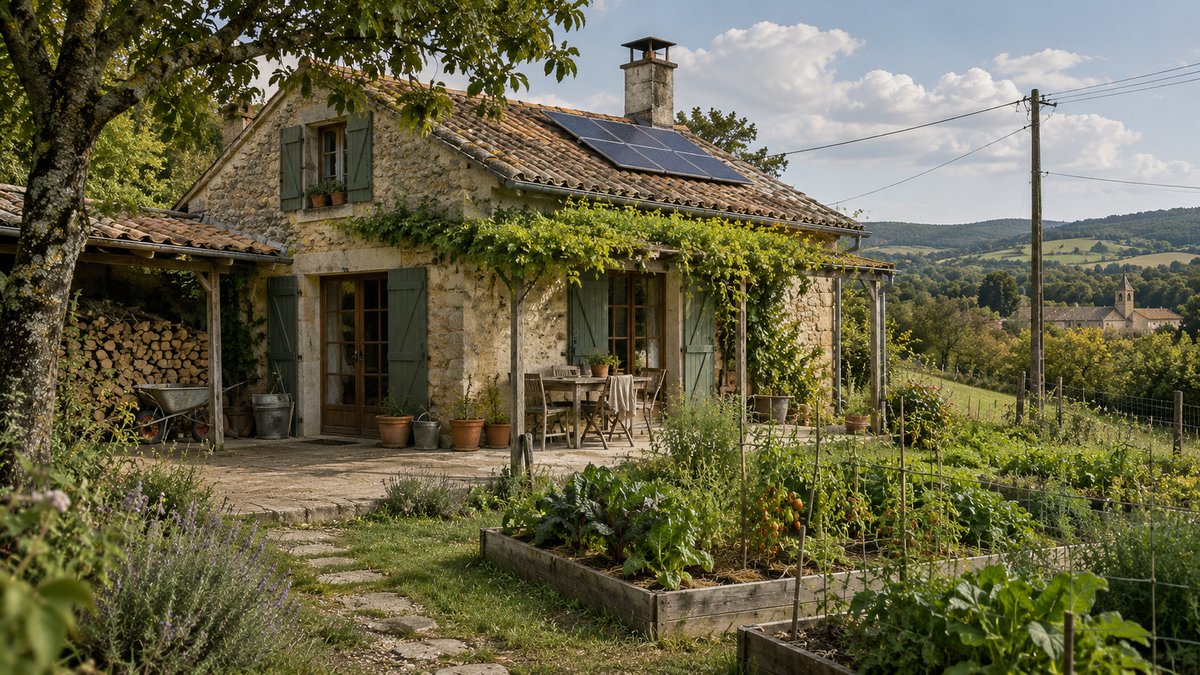
Living off-grid isn’t a lifestyle choice you make once — it’s a system you build and maintain every day. This guide covers what that system actually requires, what it costs, and what most off-grid content doesn’t tell you.
What “Off-Grid” Actually Means
Off-grid means disconnected from public utility infrastructure: no power company, no municipal water, no municipal sewer. It doesn’t mean primitive — modern off-grid homes can be comfortable and technologically capable. But it means you are entirely responsible for every system that keeps your household running.
The four core systems of off-grid life:
- Energy: Solar, wind, hydro, or some combination, plus storage
- Water: Well, spring, rainwater collection, or transport
- Waste: Septic, composting toilet, greywater system
- Food: Garden, preservation, hunting/fishing, or regular supply runs
Failing any of these is not a service interruption — it’s a household emergency you solve yourself.
Energy: The Core System
Solar Power Realities
Solar is the dominant off-grid energy technology in the continental US. The economics and reliability have improved dramatically in the last decade, but sizing correctly remains the most critical factor in whether a system works.
What a basic family system requires:
- Panels: 3,000–6,000 watts (12–24 standard 250W panels)
- Battery storage: 10–20 kWh minimum for 1–2 days of autonomy
- Inverter/charge controller: Sized to your maximum simultaneous load
- Backup generator: Critical for extended cloudy periods, particularly in winter
A well-designed system for a family of four using ~20 kWh/day costs roughly $12,000–25,000 installed. This can power a full-size refrigerator, lighting, a water pump, router, laptops, and modest heating/cooling assistance.
What it cannot power easily:
- Electric resistance heating (a 1,500W space heater running 8 hours = 12 kWh — half a day’s budget)
- Electric water heaters (replace with propane or solar thermal)
- Air conditioning as a primary cooling method in hot climates (mini-split heat pumps are more efficient; solar can power them in summer when sun is abundant, but it’s marginal)
- Electric dryers (use a clothesline)
Battery Storage: The Real Constraint
Battery storage is what allows you to use power when the sun isn’t shining. The two main technologies:
Lead-acid (flooded or AGM): Lower upfront cost ($200–400/kWh), 3–7 year lifespan, requires periodic maintenance, cannot discharge below 50% without damage. Familiar technology, widely serviceable.
Lithium iron phosphate (LiFePO4): Higher upfront cost ($600–900/kWh), 10–15 year lifespan, no maintenance, can discharge to 80–90% without damage (effectively giving you twice the usable capacity per dollar over time). Increasingly the standard for new installations.
Winter is the constraint: In Minnesota, North Dakota, or other short-day, cold climates, solar generation drops to 20–30% of summer output. Your battery system must bridge cloudy days, and your generator must bridge extended low-production periods. Propane backup generation is common and reliable.
Wind and Micro-Hydro
Wind: Practical where average wind speeds exceed 10 mph. Residential turbines ($3,000–8,000 for a 1–5 kW unit) complement solar well because wind often increases at night and in winter when solar is low. Requires a tall, unobstructed tower and proper permitting in most areas.
Micro-hydro: Extremely efficient where you have a year-round stream with adequate flow and head (vertical drop). A small stream can produce continuous power (unlike solar and wind, which are intermittent). Requires a water rights assessment — this is legally complex in the western US where water law differs significantly from the East.
Water: The Most Critical System
You can live with imperfect power. You cannot live without water.
Wells
A drilled well is the most reliable off-grid water source in most of the US.
Cost: $5,000–20,000 depending on depth to water table and your location. Test before purchase — a parcel with a naturally high water table is worth more than one that requires drilling 300 feet.
Pump options:
- DC submersible pumps: Powered directly from solar, no inverter needed, very efficient. Grundfos and SunPumping make proven systems.
- Hand pumps: Backup essential — if your power fails, you still need water. A Bison or Simple pump alongside an electric pump is good practice.
Water quality: Always test before drinking. Many rural areas have naturally occurring arsenic, nitrates, iron, or bacteria in groundwater. Know what you’re working with and filter appropriately.
Rainwater Collection
Legal status varies by state. Colorado only recently (2016) allowed limited residential collection. Texas, Tennessee, and most other states have no restrictions or actively encourage it.
A 1,500 sq ft roof in a 30-inch-rainfall area collects approximately 25,000 gallons annually — enough for a family if managed carefully. System components:
- Collection surface: Metal roofing is preferred (no chemical leaching)
- First-flush diverters: Divert the first dirty water off the roof before collection
- Storage: Poly tanks or ferro-cement cisterns; 2,500–10,000 gallons of storage
- Treatment: Sediment filter, then carbon filter, then UV sterilization for potable use
Gravity-fed distribution works if your storage tank is elevated; otherwise a 12V or AC pump moves water to the house.
Springs
A reliable, tested spring can be piped by gravity with minimal mechanical complexity — the ideal water system. Springs must be tested seasonally, as flow rates change, and legally you must typically own the land the spring originates on. Have water rights assessed before purchasing land based on a spring.
Waste: Septic and Composting
Conventional Septic
The standard solution for rural waste. A septic tank + drain field costs $5,000–15,000 depending on soil percolation, regulations, and local costs. Requires a percolation (perc) test before installation. Needs professional pumping every 3–5 years.
Permits are required in every state. Many counties now require an engineered septic system design signed by a licensed professional.
Composting Toilets
Composting toilets use no water and produce usable compost (after proper treatment time). The Sun-Mar and Nature’s Head systems are the most proven for residential use ($1,000–2,500 for the toilet unit).
The legal reality: Most US counties require a licensed septic system even if you use a composting toilet — the concern is greywater (sink, shower, laundry) which cannot go into a composting toilet. A simplified “greywater” system (mulch basins, surge tanks) handles the rest, but many counties don’t permit these without an engineered backup. Know your county’s requirements before betting on a composting toilet as your only system.
Greywater
Sink and shower water can be reused for irrigation in most US states with appropriate treatment. The simplest permitted system: a surge tank + mulch basin planted with water-tolerant perennials. The Oasis Design Network publishes comprehensive greywater guidance.
Food: Production vs. Supply Runs
Few off-grid homesteaders feed themselves entirely from their land — this is the most romanticized and least examined aspect of off-grid culture.
Realistic Garden Production
A productive 1,000 sq ft garden can supply a family of four with summer vegetables, plus substantial amounts for preservation. Extending this to year-round food requires:
- Root cellar: For potato, carrot, beet, cabbage, apple, and squash storage. Temperature should stay 32–40°F with high humidity.
- Preservation: Canning, fermenting, dehydrating. 200+ quarts preserved is a realistic winter supply goal.
- Cold frames and row covers: For early-spring and late-fall production
- High tunnel or greenhouse: For 10–12 month production in most US climates
This is a significant part-time job during the growing season. Plan for 2–4 hours per day during peak season.
Protein Production
Chickens: 6 hens produce 4–5 eggs/day during peak season, less in winter without supplemental light. Feed cost ~$15–20/month. Predator protection is a significant infrastructure requirement.
Pigs: A pair of pigs raised for 6 months produces 300+ lbs of pork. Processing requires either a licensed butcher (diminishing availability in rural areas) or doing it yourself with equipment.
Hunting and fishing: Where permitted and available, can supply meaningful protein. This is a skilled activity — plan to invest 1–3 seasons developing proficiency.
Supply Runs Reality
Most off-grid households make weekly or biweekly supply runs for items they don’t produce: bulk grains, fats, dairy, medical supplies, hardware. A well-stocked pantry (3–6 months of non-perishables) means your supply runs are for fresh items and opportunistic stocking, not emergencies.
Costco’s bulk buying model works exceptionally well for off-grid pantry building.
Communication Off-Grid
Internet
Starlink: As of 2024, the most practical internet solution for most US off-grid locations. $120/month, $599 hardware, 50–200 Mbps, works from almost anywhere with a clear view of the sky. Power consumption ~75W (plan for ~1.5 kWh/day).
T-Mobile Home Internet and fixed wireless: Works in some rural areas with 4G/5G coverage. Much cheaper ($50–70/month) but coverage is spotty. Check your parcel’s signal strength in person before relying on it.
Emergency Communication
Satellite communicators (Garmin inReach, SPOT): Two-way satellite texting, GPS tracking, and SOS capability. $15–50/month subscription. Essential when you’re beyond cell range, which most off-grid properties are.
Ham radio: A Technician class license (a few days’ study, online exam) gives access to local repeater networks covering most of the country. A mobile VHF/UHF setup covers most emergencies.
Weather alerts: A NOAA weather radio is mandatory. Severe weather events hit rural properties differently — there are no emergency alerts pushed to your phone if you have no cell signal.
The Honest Trade-offs
Time: An off-grid homestead requires 2–6 additional hours per day compared to suburban living — wood cutting, garden management, system maintenance, water monitoring, food preservation.
Distance from services: Medical care, grocery stores, schools, and social connections are all farther away. This matters more than most prospective off-gridders acknowledge.
System dependency: Your comfort and safety depend on systems you operate and maintain. When the well pump fails at -10°F, you fix it or you don’t have water.
Initial capital: A well-executed off-grid setup requires $50,000–150,000. Doing it cheaply usually means doing it twice.
Learning curve: Every skilled off-gridder has a list of expensive mistakes. Plan for 2–3 years before the systems feel natural.
The reward — genuine resilience, quiet, self-determination, and a physical competence modern life rarely requires — is real. So is the work.
Related guides:
More in this category
Rejoindre la communauté
Recevoir nos guides chaque semaine
Des conseils pratiques, des retours terrain, les meilleures ressources — directement dans votre boîte mail.
Rejoindre le Refuge →