Tiny House Complete Guide: Everything You Need to Know Before You Start
Everything about tiny houses in the US — legal framework, real costs, daily life, common pitfalls — before you buy or build.
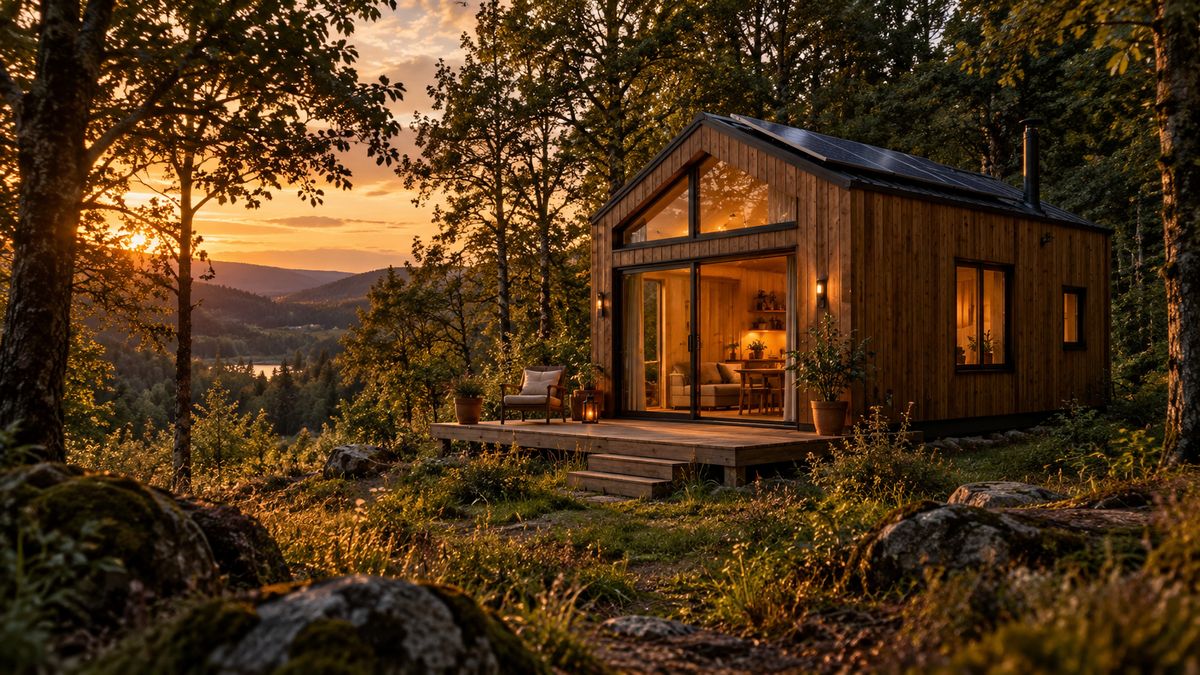
Tiny houses get a lot of media coverage and social media interest. Many people are attracted to the idea — the simplicity, the cost, the freedom from a 30-year mortgage. Many fewer follow through, and some who do encounter problems they didn’t anticipate.
This guide is the realistic picture: the legal reality, the actual costs, what daily life looks like, and the specific challenges that catch people off guard.
The Legal Landscape: Where Tiny Houses Stand in the US
Classification matters enormously:
A tiny house on wheels (THOW) is not legally a house in most jurisdictions. It’s classified as an RV — a recreational vehicle — which means:
- It can be parked in RV parks (sometimes temporarily, sometimes as a permanent residence)
- It can be placed on private property in many rural areas
- It generally cannot be placed as a primary residence on land zoned residential in most municipalities
A foundation-placed tiny home is treated more like a regular house and must meet local building codes, which often include minimum square footage requirements (some municipalities require 1,000+ sq ft for new construction).
Where tiny houses work best legally:
- Rural counties with permissive zoning or no zoning
- States with “cottage or accessory dwelling unit” legislation
- Dedicated tiny house communities (a growing market)
- Municipalities that have explicitly created tiny house regulations (e.g., parts of Oregon, Texas, Colorado)
Where they don’t work:
- Most suburban municipalities with standard residential zoning
- Areas where landlords explicitly prohibit RVs/campers on the property
- States with strong HOA regulations in most populated areas
Before you do anything: Contact your county zoning office (or your intended location’s zoning office) and ask specifically about tiny houses on wheels and foundation-placed tiny homes. The regulations vary so much that general advice here can’t substitute for checking your specific situation.
Real Costs: What People Don’t Tell You
The buy vs. build question:
A professionally built new THOW from a reputable builder (Tumbleweed, Mint Tiny Homes, Escape) runs $60,000–150,000. This seems expensive for a 200–400 sq ft home, but it’s not cheap construction — good tiny homes use marine-grade materials to handle the stresses of road travel.
Building your own THOW is possible but typically takes 1–2 years of weekends for someone without construction experience, and “going over budget” is nearly universal among DIY builders. Budget 20–30% more than your estimates for first-time builders.
Foundation-placed tiny homes: A custom-built small home (400–800 sq ft) on a foundation runs $80,000–200,000+ depending on finishes and location, plus the cost of land.
Used THOWs: $20,000–60,000 depending on age, condition, and builder quality. The used market has improved significantly — there are quality homes available. Inspect any used THOW with an experienced tiny house builder before purchase. Common issues: roof leaks, trailer corrosion, inadequate insulation, electrical problems.
Hidden costs that catch buyers off guard:
Land costs: If you don’t own land, you need somewhere to park. RV park fees: $400–1,200/month in most markets. Renting a spot on private land: $100–500/month if you can find it. Buying land: varies enormously by region.
Transportation: Moving a THOW requires a vehicle rated to tow it (most are 10,000–13,000 lbs) or hiring a transport company ($1–5/mile for professional movers).
Setup costs at a new location: Utility hookups (water, sewer, electrical pedestals) often aren’t included in land rental prices and can cost $500–5,000 to set up properly.
Maintenance: A THOW requires more frequent maintenance than a fixed home — road travel stresses everything. Budget 2–3% of the home’s value annually for maintenance.
Daily Life in a Tiny House: What Changes
What gets dramatically easier:
- Cleaning (20–30 minutes to thoroughly clean a tiny house)
- Heating and cooling (a small space is cheap to condition)
- Decluttering (the space forces ongoing editing)
- Mental simplicity (fewer decisions about stuff, less visual clutter)
- Monthly costs (many tiny house owners have zero mortgage, low utilities)
What gets harder:
Storage: You will face a genuine zero-sum game. Every new object requires discarding or storing another. People with significant hobby equipment, collections, or tools find this particularly challenging.
Having guests: Hosting overnight guests is difficult in under 300 sq ft. Some people find this freeing; others miss the ability to have family stay comfortably.
Working from home: A dedicated quiet workspace is essentially impossible in a small THOW without creative solutions. Sound travels. If both adults work from home, this is a real issue.
Children: Tiny houses with children require the children to be outdoors frequently. They work best in mild climates where outdoor time is possible year-round. A child doing homework at the same table where another person is on a video call creates obvious friction.
Storage for seasonal items: Where do winter clothes go in summer? Skis? Holiday decorations? A storage unit ($100–200/month) often becomes a permanent fixture in a tiny house budget.
Sizing: What People Actually Need
The fantasy is 150 sq ft. The reality that most people sustainably inhabit is higher.
The sustainable minimums based on people who’ve actually done it:
- Single adult who works outside home: 150–200 sq ft
- Couple, both working outside home: 200–280 sq ft
- Couple with one working from home: 280–350 sq ft
- Family with one child: 350–450 sq ft
- Family with two children: 450–600 sq ft
Under these minimums, most people report significant friction within 1–2 years — not because it’s impossible, but because the constraints create daily stress.
Design Principles for Livability
Ceiling height: 8–9 foot ceilings in the main living area (not just the loft) dramatically improve how the space feels. The trend toward 13-foot overall height (legal towing height limit) with a tall main floor and lower loft is more livable than the opposite.
Loft design: A loft works for sleeping, but most adults can’t sit up in a loft with standard THOW proportions. If a loft is your main bedroom, the actual sleeping space should allow 3–4 feet of clearance above the mattress, not 24 inches.
Light: More windows than you think you need. Skylights. Light-colored walls and finishes. Light transforms the perceived size of a small space more than almost any other factor.
Storage designed in: Stairs with built-in drawers. Benches with storage underneath. Wall-mounted fold-down tables. Storage in dead spaces (under tubs, inside walls). These aren’t bonuses in a tiny house — they’re necessities.
Dedicated functional zones: Even in 200 sq ft, having visually distinct zones for cooking, sleeping, and living makes the space feel larger and more functional than an open studio layout.
The Off-Grid Tiny House Option
A THOW can be made partially or fully off-grid:
Power: 400–800W of solar panels + 200–400Ah of lithium battery storage covers modest electrical needs (lighting, phone charging, laptop, small appliances). Add a propane generator or connection to shore power for cloudy periods or high-draw appliances.
Water: A fresh water tank (20–80 gallons typical in a THOW) filled periodically from a water source, or plumbed to a water line when stationary. Gravity-fed or pump-pressurized.
Waste: Composting toilets (Nature’s Head, Air Head) eliminate the need for a sewer connection. They’re genuinely odor-free when properly maintained and produce compost usable on non-food plants. Many off-grid tiny house residents also use a simple greywater system (sink and shower water filtered and dispersed into the ground).
Heat: Propane or wood mini stoves designed for small spaces (Dickinson Marine, Cubic Mini Wood Stoves) provide efficient heat in a small volume.
Community Resources
The tiny house community is active and genuinely helpful to newcomers:
- Tiny Home Industry Association (THIA): Industry standards, advocacy, member builders
- American Tiny House Association (ATHA): Community organization, zoning advocacy
- r/TinyHouses (Reddit): Active community, real-world experience, honest discussions of problems
- Tiny House Community (Facebook): Large active community
The best advice comes from people who’ve lived in tiny houses for 2–5 years, not 6 months. Seek out the longer-term perspectives — both the genuine positives and the genuine challenges.
Related guides:
More in this category
Rejoindre la communauté
Recevoir nos guides chaque semaine
Des conseils pratiques, des retours terrain, les meilleures ressources — directement dans votre boîte mail.
Rejoindre le Refuge →