Car Emergency Kit: What You Actually Need in Your Trunk
Everything you need in your car for breakdowns, accidents, and roadside emergencies — a complete, practical list with real recommendations.
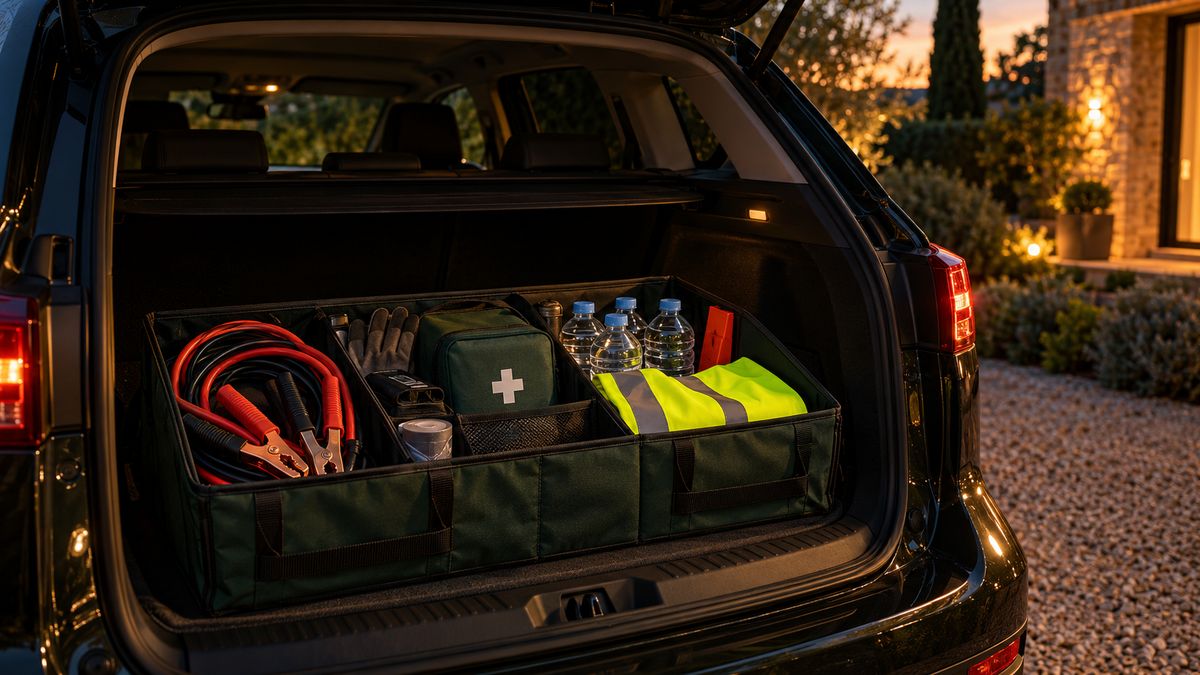
Your car breaks down on the highway at night. A fender-bender in a rural area. A flat tire in the rain. A winter storm that leaves you stuck for hours. These are ordinary scenarios, not disasters — and the difference between a stressful inconvenience and a dangerous situation often comes down to what’s in your trunk.
This guide covers what to actually carry, organized by priority, with specific product recommendations.
Safety First: The Non-Negotiables
These items belong in every vehicle, always:
Warning Devices
When you’re stopped on the road, making yourself visible saves lives — including your own.
Reflective triangles: Place behind your vehicle to alert approaching traffic. Required by law in many states and standard in most countries. A set of 3 meets standard requirements. Keep them 50–100 feet behind your vehicle on a highway.
Road flares or LED flares: More visible than triangles, especially in rain. Traditional flares burn for 15–30 minutes (single use, check expiration). LED flares last years and are reusable — the Orion Safety Products LED Road Flares are durable and bright.
Reflective safety vest: Put it on before you get out of your car on a highway. Bright orange or yellow, with retroreflective strips. A $10 investment that could save your life.
Light
Flashlight or headlamp: You need hands-free light to change a tire at night. A headlamp is better than a flashlight for this purpose. Keep fresh batteries or use a rechargeable model charged from your car’s USB port. The Black Diamond Spot headlamp is reliable and affordable.
Tier 1: Basic Kit (Every Vehicle)
Cost: ~$75–150
| Item | Recommendation | Cost |
|---|---|---|
| Jump starter (portable) | NOCO Boost Plus GB40 or GB70 | $70–100 |
| Reflective warning triangles | Composed safety triangles (3-pack) | $15–25 |
| LED road flares | Orion Safety LED flares | $20–30 |
| Safety vest | ANSI Class 2 | $8–15 |
| Headlamp | Black Diamond Spot or Petzl Tikkina | $25–40 |
| Basic first aid kit | Ready America or similar | $15–25 |
| Blanket | Emergency Mylar or small wool blanket | $5–20 |
| Phone car charger | USB-A/USB-C dual port | $10–15 |
Total: ~$168–270 — worth every dollar.
Tier 2: Complete Kit (Primary Vehicle)
Add these to Tier 1 for comprehensive coverage:
Tire Tools
Tire inflator/air compressor: Plugs into your 12V outlet and inflates a flat tire. Essential for the many flats caused by slow leaks rather than sudden blowouts. Viair and EPAuto make reliable models ($25–60).
Tire sealant (Fix-a-Flat or Slime): Temporarily seals small punctures. Buys you time to reach a shop. Check expiration dates every 2–3 years.
Tire pressure gauge: Keep one in the glove box. Proper tire pressure improves fuel economy, handling, and tire life — and many blowouts are caused by underinflated tires.
Note on spare tires: Know whether your car has a full-size spare, a “donut” spare (temporary use, 50 mph max, 50–70 miles max), or no spare at all (many newer cars use run-flat tires or only provide sealant kits). Check your owner’s manual. If you have a spare, also know where your jack and lug wrench are located.
Tools
Jumper cables (traditional): Even if you have a jump starter, traditional cables work between two vehicles and have no battery to die. Keep 16–20 foot heavy-gauge cables.
Multi-tool: Leatherman Wave or similar. Screwdrivers, pliers, knife — useful in dozens of situations.
Duct tape and zip ties: Solve temporary problems on the road. A torn mudflap, a loose hose, a broken trim piece — you’ll find uses.
Tow strap: Rated 6,000+ lbs. For getting pulled out of a ditch or soft shoulder. Only use with vehicles equipped with proper tow hooks — never attach to bumpers.
Folding shovel: For digging out if stuck in snow, mud, or sand. Especially important in winter states.
Sustenance (For Extended Wait Times)
Water: 1–2 liters per person. Water keeps indefinitely in sealed bottles but replace every year.
Non-perishable snacks: Protein bars, trail mix, jerky. Replace annually.
Small cash: A few $20 bills. Useful when card readers are down or if you need to pay for a tow quickly.
Documentation
Printed insurance card and registration: Keep copies in the glove box — originals can stay home or in your wallet.
Roadside assistance number: Written on paper. AAA number, or your insurance company’s roadside line.
Local state police non-emergency number: For highway incidents that don’t require 911 but need a report.
Paper map: State road map or atlas. Download offline Google Maps or Maps.me for your region before long trips.
Tier 3: Winter Kit (Cold Climate Vehicles)
If you live in a region with real winters, add:
Ice scraper with long handle and brush: You know you need this. The Subzero Heavy-Duty Extendable Snow Brush is good. Keep it accessible, not buried.
Bag of sand or kitty litter: Pour under tires for traction if stuck in snow or ice.
Warm gloves and hat: Stored in car November through March. Changing a tire in January without gloves is miserable and dangerous.
Hand warmers: Chemical warmers last 8–10 hours each. Keep 4–6 pairs.
Sleeping bag or heavy blanket: If you’re stuck for hours, you need to stay warm. A sleeping bag rated to 20°F is small insurance against a serious situation.
Windshield washer fluid (winter formula): Rated to -30°F or lower for your climate. Running out during a snowstorm is dangerous.
Booster cables + jumper: Cold kills car batteries. Winter is the most common season for battery failures.
Packing and Maintaining Your Kit
Organization: Use a medium-sized duffel bag or dedicated trunk organizer. Everything should be contained and not sliding around.
Accessibility: Heavy items in the trunk; frequently needed items (phone charger, flashlight) in the cab. Know exactly where your kit is — in an emergency, you don’t want to be searching.
Annual maintenance:
- Check tire sealant expiration
- Check battery on jump starter and recharge if needed
- Restock used first aid supplies
- Replace expired food and water
- Check flare expiration dates
- Test your flashlight/headlamp batteries
After use: Replace anything you used as soon as possible. A kit with missing components is a kit that may fail when you need it.
Specific Product Recommendations
The jump starter is the most important single item and worth paying for quality:
- NOCO Boost Plus GB40 (1000A, 12V): Handles most cars and small trucks. Fits in a glove box. ~$100.
- NOCO Boost HD GB70 (2000A, 12V): For larger trucks, SUVs, and diesel engines. ~$150.
For the first aid kit, the Ready America Deluxe Emergency Kit or the Adventure Medical Kits Weekender provide good coverage without overpaying for a kit you need to customize anyway.
Related guides:
More in this category

Rejoindre la communauté
Recevoir nos guides chaque semaine
Des conseils pratiques, des retours terrain, les meilleures ressources — directement dans votre boîte mail.
Rejoindre le Refuge →